After Civ 7 stumbled, Humankind 2 looks like it's making smart choices to pick up the
Very dialectical.
Résumé de l'actualité
We all know the tale of Civilization 7. It came, it saw, it had you choose a new civ at the dawn of each age and that annoyed quite a lot of people indeed. Sic transit gloria Meier-i.
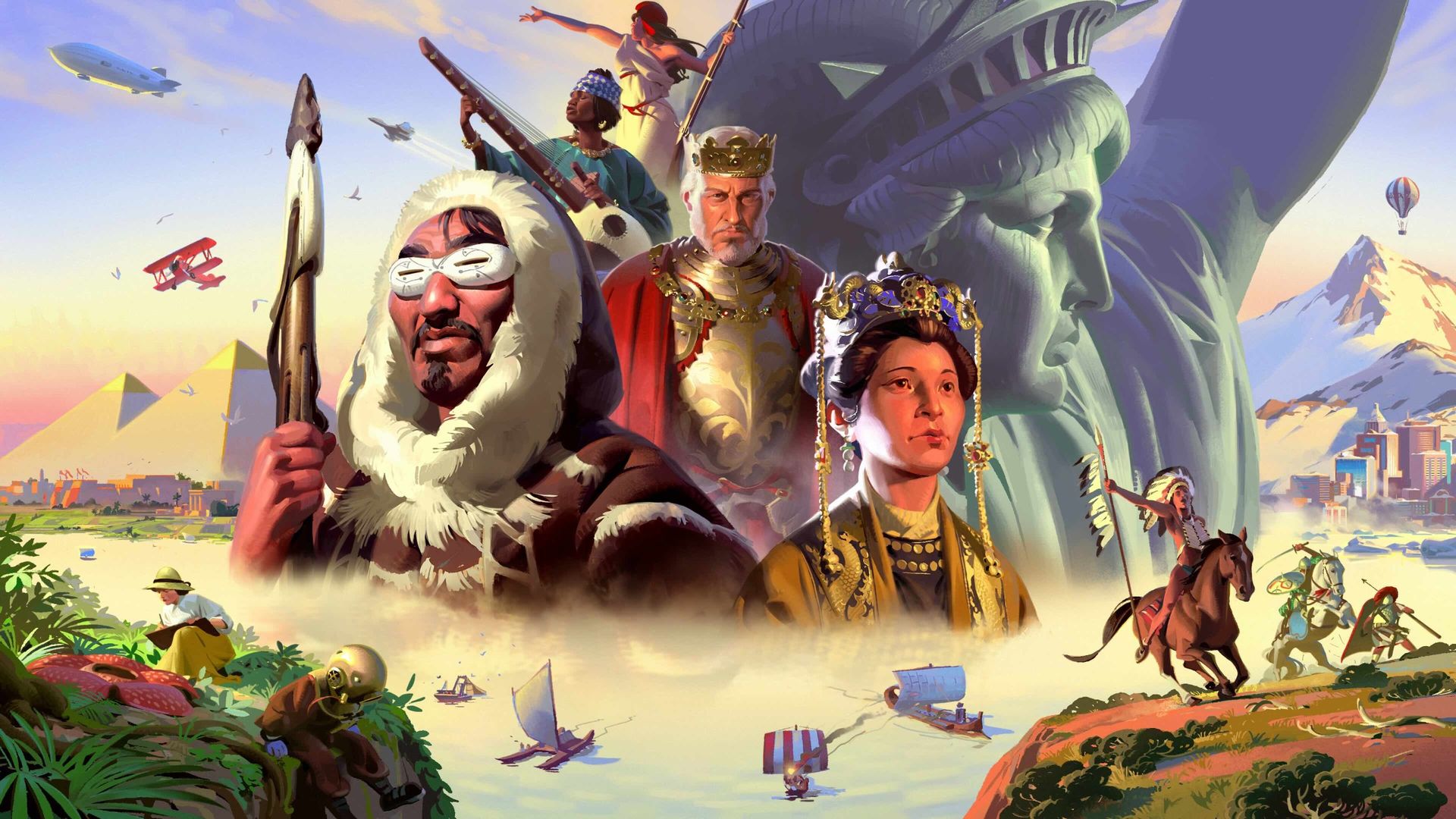
So I was a bit surprised when Amplitude sat us down for a look at Humankind 2 and focused so much on its culture system, reworked from the first game, but a big part of which is selecting new cultures to embrace as the eras chug along—Egyptians becoming Berbers, or Romans, or even English (a dreadful fate) if circumstances conspire to allow it in the game's sandbox.
But I liked what I saw. The other big talking point of the hands-off demo I got was on climate and biome, and how that intersects with and shapes culture. Humankind 2's vision of history is a dialectical one, where a culture is shaped by a biome which is changed by a culture which is influenced by a biome which… you get the idea. Climate isn't static, either. Just like real life, it'll undergo natural and unnatural disruptions depending on chance and player/NPC activity.
So it all feels like an intricate and natural take on (a type of) materialist history. Just, you know, a materialist history where the Egyptians might find themselves waking up to snow one day.
Our demo started us off looking at a map of the world—as in Earth, the actual world—dotted with numerous tribes. The interplay of environment and culture kicks off immediately: each tribe gets a "First Tale" linked to the territory in which they begin, the founding myths that act as the kernels for the full-fledged cultures that will eventually develop. They provide buffs (+X Authority, +Y Learning, and so on) and changes to tiles and citizen roles.
These are the things that, from the jump, make you just a little bit better at existing in your chosen environment than the other guys on the map, and that are meant to make your faction feel less like it emerged, fully-formed, from nowhere at all. We ended up with a tribe in the general vicinity of modern-day Egypt whose First Tale, appropriate enough for the banks of the Nile, was "Flood Tamer"—the upshot being that they consumed less water and were better at putting water and its generation to positive uses than average.
Amplitude says that Humankind 2's different starting biomes will have a dramatic impact on the shape of your game, especially as you start drilling down past the broad bonuses of your selected First Tale and into the more specific trees of "Adaptations" you can make to deepen your culture's affinity for its chosen biome. As Ancient Egypt, sweating in the sun of the North African desert, we could spend culture points to unlock adaptations like mudbricks, camel herding, heat endurance, and so on—various ways to adapt to the sweltering heat and scarce water of your chosen home.
Our culture and selected adaptations let us actually scrounge up some water in the African desert, but Amplitude noted that this was no reason to rest on our laurels. Climate shifts, like the actual Medieval Warm Period or Little Ice Age, can occur, turning biomes more arid or humid. Your carefully selected adaptations can be blunted by mother nature, though that's not to say it's impossible to adapt to radical change: toward the end of the demo we leapt into a save which saw Egyptian civilisation blanketed in snow, sheets of ice climbing the sides of the pyramids. Its adaptations now focused on warmth, whaling, and the long-term preservation of scarce resources.
The goal of all this is very Amplitude: factions that feel distinguished by more than a different aesthetic and a set of starting bonuses, and that feel uniquely tied to, and shaped by, the world around them. Having only really seen Ancient Egypt in action, I can't make any declarations as to its success, but I struggle to imagine a player starting in the Tundra, Taiga, Forest, or Brush biomes making the same moves our demo did.
Likewise, if our desert-adapted Egyptians suddenly marched into the Jungle, I get the sense they would find themselves at a serious disadvantage compared to the environment's native inhabitants. This is something you could feasibly exploit, one day. Amplitude suggested that, if you had a culture that was incredibly good at handling arid environments, you might willingly trigger some sort of nuclear apocalypse to render the whole Earth that way. Great news for you, bad news for your enemies who grew up in the snow (and for the billions of vaporised people, I suppose).
Amplitude is trying to move away from what it called "monolithic" cultures in Humankind 1—consisting of "a unity, a building, and a bonus, basically"—into something more skill-tree-based in the second game.
Every culture has a set of customs you can unlock, divided by tier, and which you equip and activate in a limited number of bonus slots. They do pretty much what you'd expect—Egypt can opt into a pharaonic tradition to buff its authority generation, or get better at wringing water from the desert sand—but it's another way the studio is trying to make each faction feel unique, tailored, and adapted specifically to its material conditions.
Catégorie PlayPadHub
Cet article est classé dans Leaks et rumeurs. PlayPadHub regroupe les actualités, tests, soluces, leaks, vidéos et informations e-sport pour faciliter la veille autour des jeux suivis par la communauté.